Von den Kapverden über die Kanaren nach Mallorca – die Atlantiküberführung einer Segeljacht Jeanneau 51
(scroll down for ENGLISH)
Von Michael Allhoff
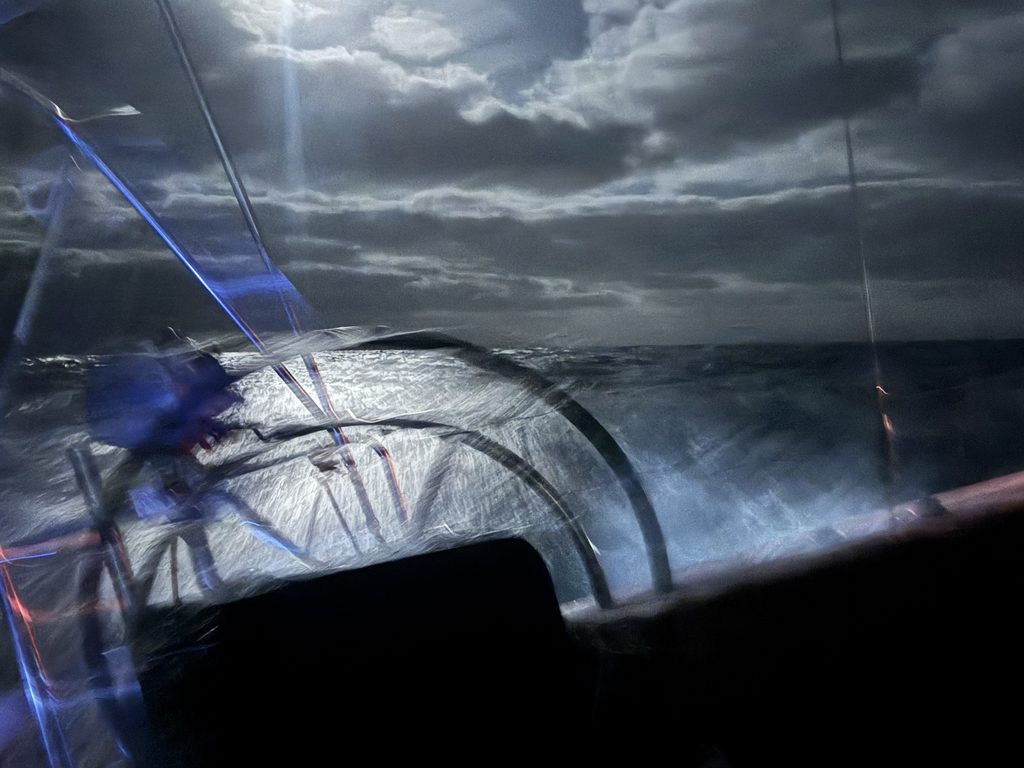
Der Atlantik ist schwarz in dieser Nacht. Es regnet. In Strömen. Windböen peitschen über eine öligdunkle See. Wellen von bis zu sechs Metern Höhe laufen von schräg achtern auf unser Segelschiff zu. Immer wieder wird das Heck der Segeljacht von einer mächtigen See angehoben. Und mit voller Fahrt nach vorn geschoben. Bei diesem Surfen auf den Wellen zeigt die Logge immer mal wieder bis zu dreizehn Knoten Speed an – bei einer Rumpfgeschwindigkeit von neun Knoten…
Der Wind hatte tagsüber aufgefrischt. Zunächst kräftig, dann stürmisch. Die Wellen waren gewachsen. Dann zogen Regenschauer über das Meer. Mächtige Brecher rollten heran, mit gischtenden Schaumkronen. Sturzseen fluten jetzt steuerbords über Bug.
Seit lange vor Mitternacht steuere ich von Hand. Der Autopilot war ausgefallen. Keine Zeit, die Technik zu resetten. Voraus liegt Gibraltar. Doch bis dahin ist es noch weit. Das ist eine jener Nächte auf See, in denen die Welt auf wenige Parameter schrumpft: Auf den Kompass. Den Kurs. Das Ruder. Den Wind. Und die nächste Welle…
Während die Jeanneau 51, eine 15 Tonnen schwere und ozeangängige Jacht, durch den Atlantik rauscht, denke ich an unseren Aufbruch auf den Kapverden. An die Wärme der tropischen Sonne, an das türkisfarbene Wasser vor der Insel Sal. Und daran, dass wir vor gut zwei Wochen zu einer Reise aufgebrochen waren, deren eigentliche Herausforderungen noch vor uns liegen sollten.
Abschied von Afrika
Palmeira, Insel Sal, Kapverden. 22. April 2026.
Die Sonne steht hoch über dem kleinen Hafenort, als wir am frühen Nachmittag die Leinen loswerfen. Vor uns liegt der offene Atlantik. Unser Ziel: Palma de Mallorca. Rund 2.500 Seemeilen entfernt, auf der anderen Seite eines Ozeans und hinter der Straße von Gibraltar.
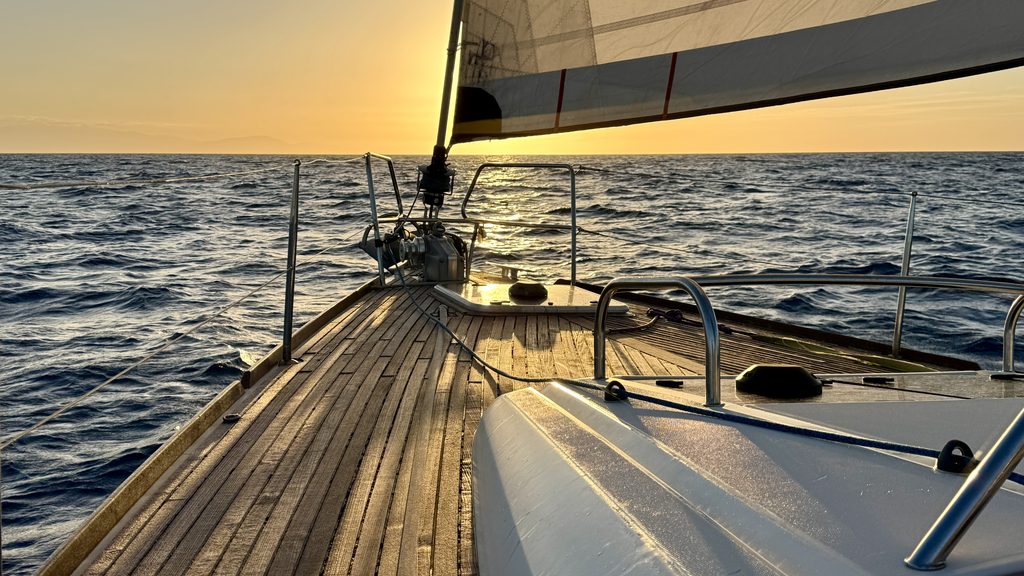
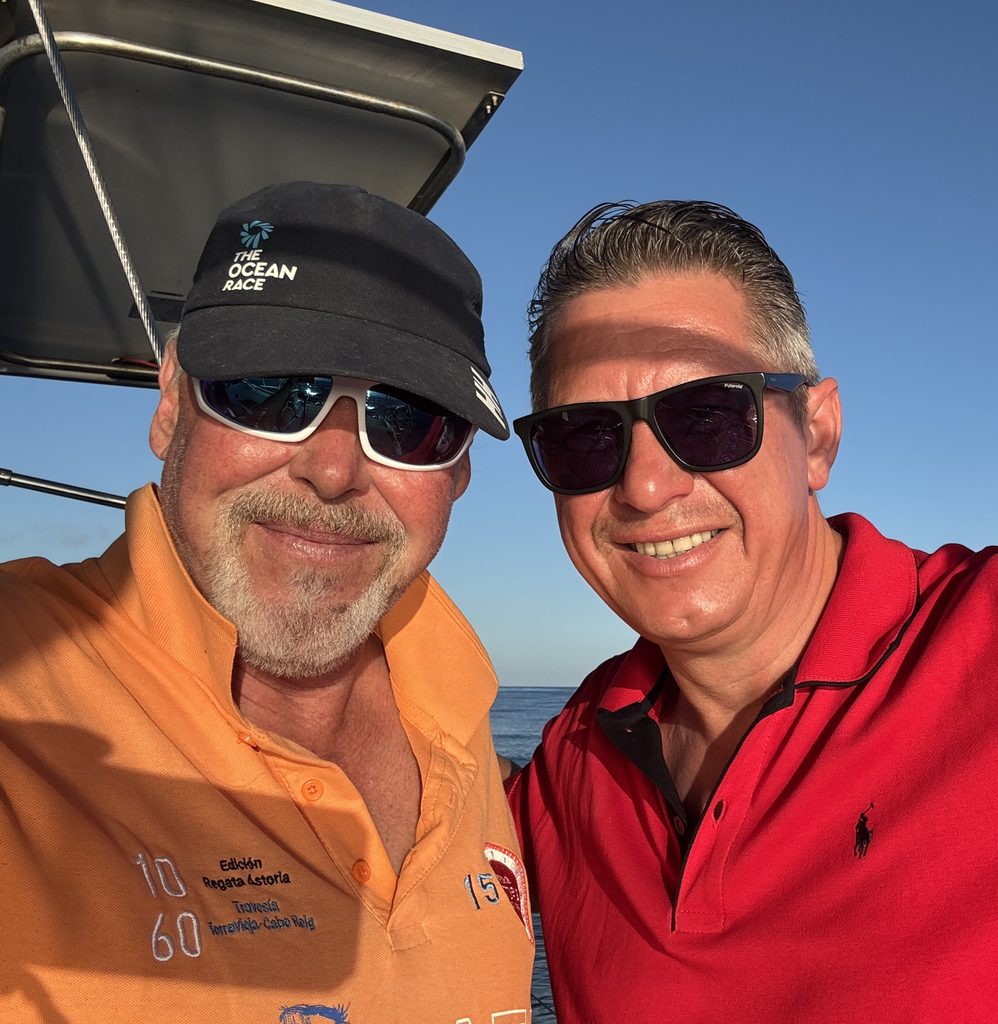
Unsere Yacht, die SY GRAPPA, ist ein elegantes, fünfzehn Meter langes Hochseeschiff. Komfortabel, solide, für lange Ozeanfahrten gebaut. Doch auch eine stattliche Segelyacht dieser Größe ist auf dem Atlantik nur eine Nussschale zwischen Himmel und Horizont.
Wir sind drei Mann an Bord. Mein Co-Skipper Waldemar, unser Deckhand Rüdiger, ich als verantwortlicher Skipper.
Mit Waldemar verbindet mich das Vertrauen, auf das es bei einer Hochseepassage ankommt. Denn dort draußen auf See gibt es keinen Feierabend. Kein Capt´n kann das Schiff rund um die Uhr alleine führen. Es gilt, Entscheidungen zu teilen. Man muss sich darauf verlassen können, dass der andere aufmerksam bleibt, wenn er Nachtwache hat. Selbst wenn Müdigkeit und Erschöpfung ihren Tribut fordern…
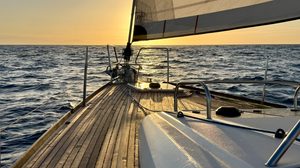
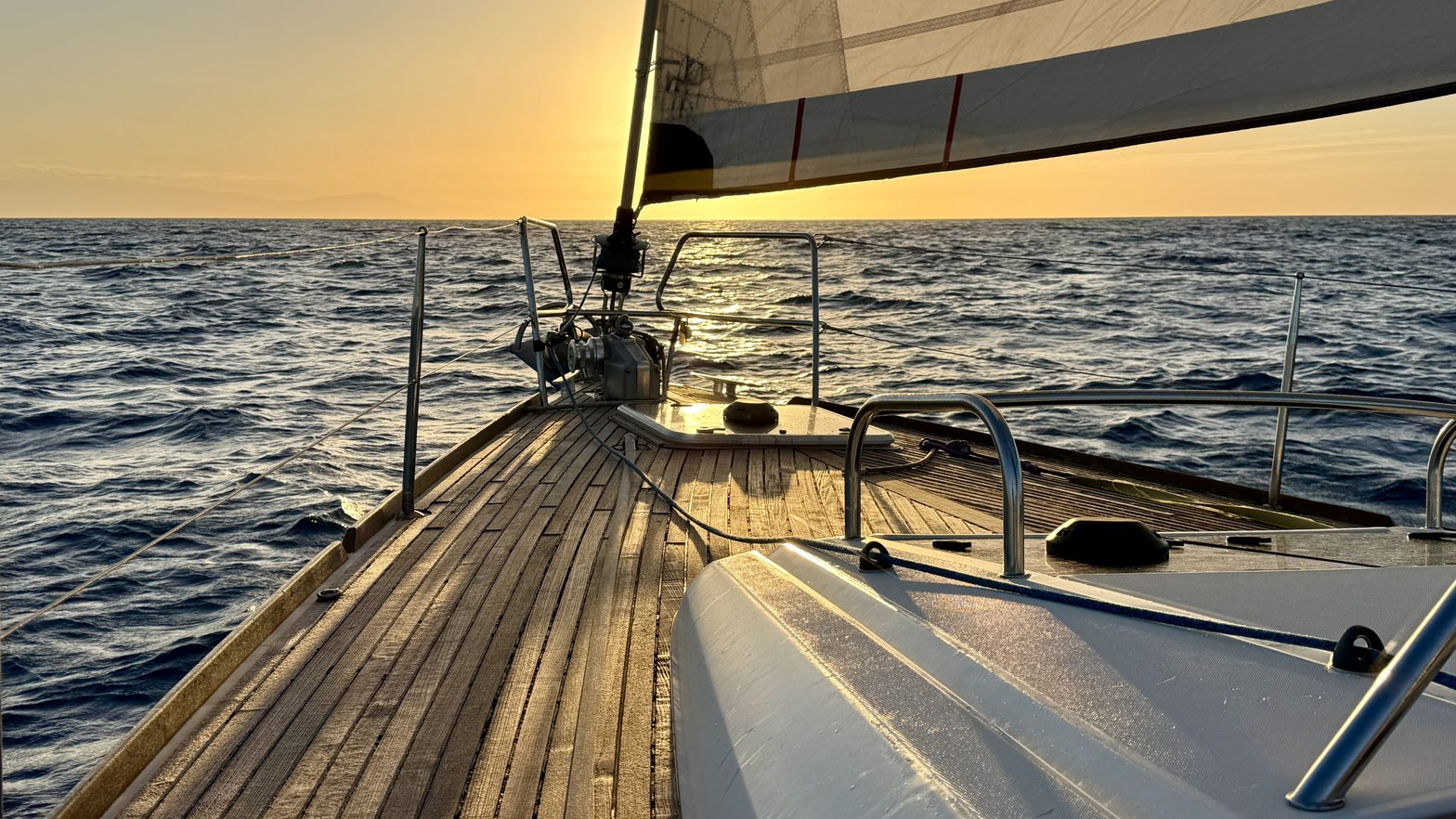
Die ersten Stunden sind angenehm. Ein leichter Nordwind streicht über das Deck. Die Sail Yacht GRAPPA zieht ihre Bahn nordwestwärts, zunächst unter Motor und Großsegel, bei auffrischendem Wind gleitet sie allein unter Segeln durch den Atlantik.
Doch unser Kurs führt mitten hinein in die vorherrschenden Nordostpassatwinde. Wer von den Kanaren in die Karibik segelt, kann sich vom Passat nach Westen tragen lassen. Wir aber wollen in die entgegengesetzte Richtung. Nach Norden, gen Europa! Eine Segelfahrt gegen Wind und Wellen.
Der Ozean diktiert den Kurs
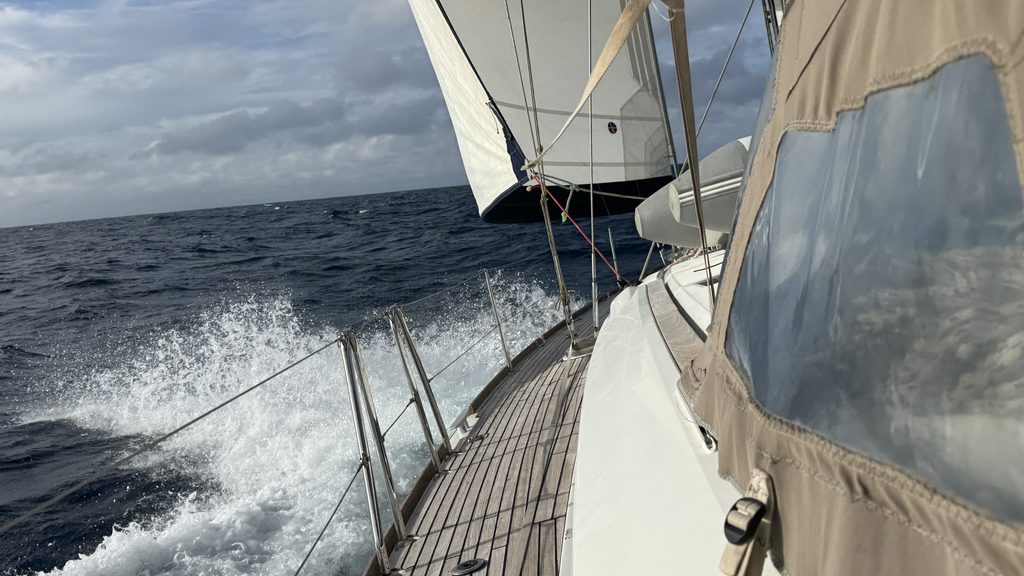
Schon am zweiten Tag wird deutlich, dass der Atlantik uns keinen geraden Weg schenken wird. Der Wind weht aus Nordnordost. Genau aus jener Richtung, in die wir segeln müssen. Die Wellen wachsen. Zwei Meter, drei Meter. Die GRAPPA stampft gegen die See, ihr Bug taucht in die Wellentäler, weiße Gischt fliegt über das Vorschiff. Wir kreuzen.
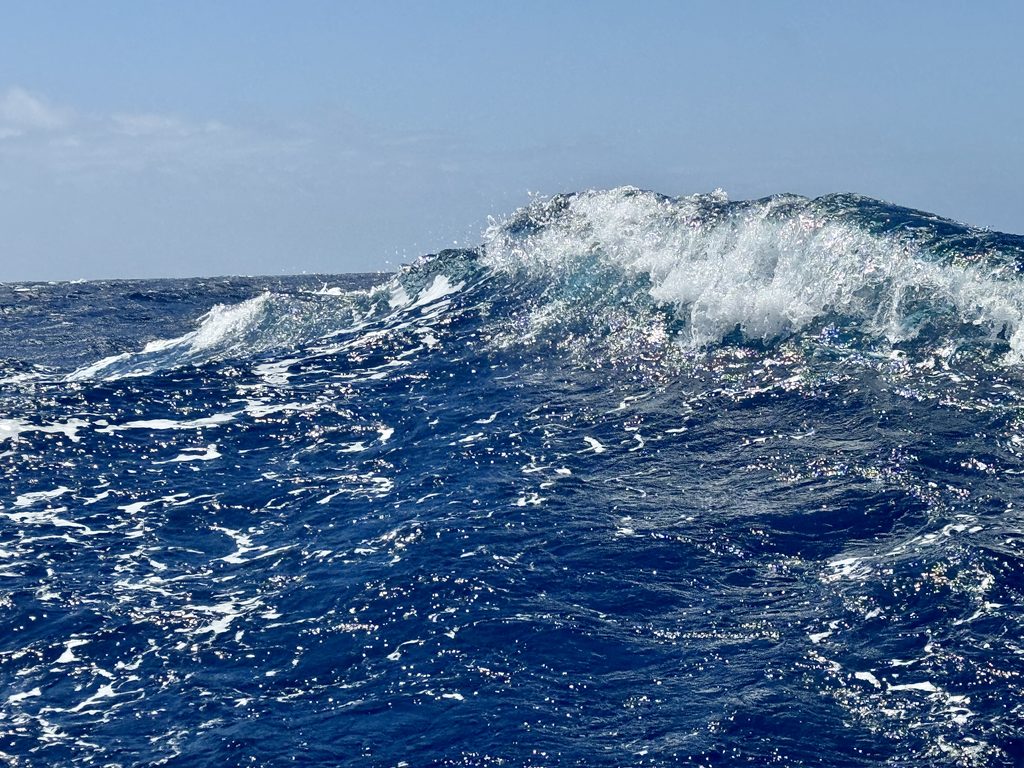
Ein Schlag nach Nordwesten, die Wende und wieder nach Osten. Auf der Seekarte entstehen lange Zickzacklinien. Mitunter gewinnen wir über Stunden kaum Höhe in Richtung unseres Ziels.
Das ist die reale Geometrie des Segelns gegen den Wind. Ein Segelschiff kann vieles. Es kann die Kraft des Windes nutzen, selbst wenn der Wind von vorne kommt. Aber kein Schiff kann direkt gegen den Wind segeln. Und je stärker Wind und Welle auf den Bug werden werden, desto weiter entfernt sich der tatsächlich gesegelte Kurs von der kürzesten Verbindung zwischen zwei Punkten.
Die Tage erhalten ihren eigenen Rhythmus. Wache gehen. Segel trimmen. Reffen. Wenden. Navigieren. Kochen. Schlafen. Dann beginnt alles von vorn.
Stunden verlieren ihre Bedeutung. Nicht mehr die Uhr bestimmt unseren Alltag, sondern der Wechsel der Wachen, der Stand der Sonne und die Veränderungen des Windes. Ich nenne das „Seatime“ – die Zeit an Bord verläuft anderes als an Land.
Manchmal ist der Himmel wolkenlos, und die Sonne verwandelt den Atlantik in eine endlose Fläche aus leuchtendem Blau. Dann ziehen wieder graue Wolken auf, und die See wird stahlfarben, bleiern, glitzernd, unruhig. In solchen Momenten spürt man, dass der Ozean lebendig ist. Das Meer verändert sich beständig: Keine Welle gleicht der anderen, kein Tag verläuft wie der vorherige. Und doch – oder gerade deswegen – entsteht aus dieser scheinbaren Gleichförmigkeit eine ganz eigene Faszination.
Delfine im Morgenlicht
Am vierten Tag frischt der Wind kräftig auf.
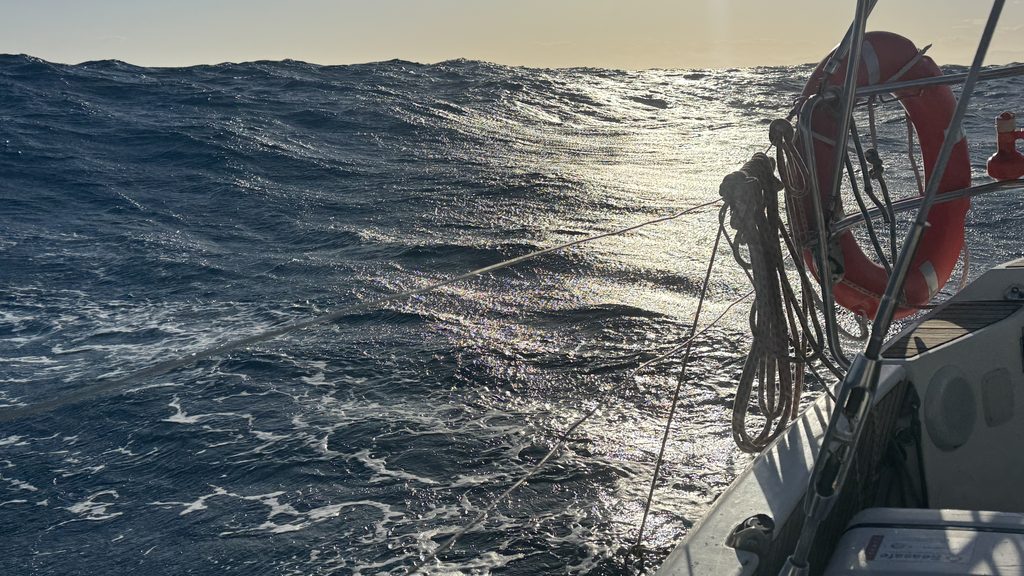
Wir verkleinern die Segelfläche. Das Großsegel steht inzwischen im dritten Reff. Die Wellen erreichen stellenweise vier Meter Höhe. Der Bug der GRAPPA arbeitet sich durch die steilen Seen.
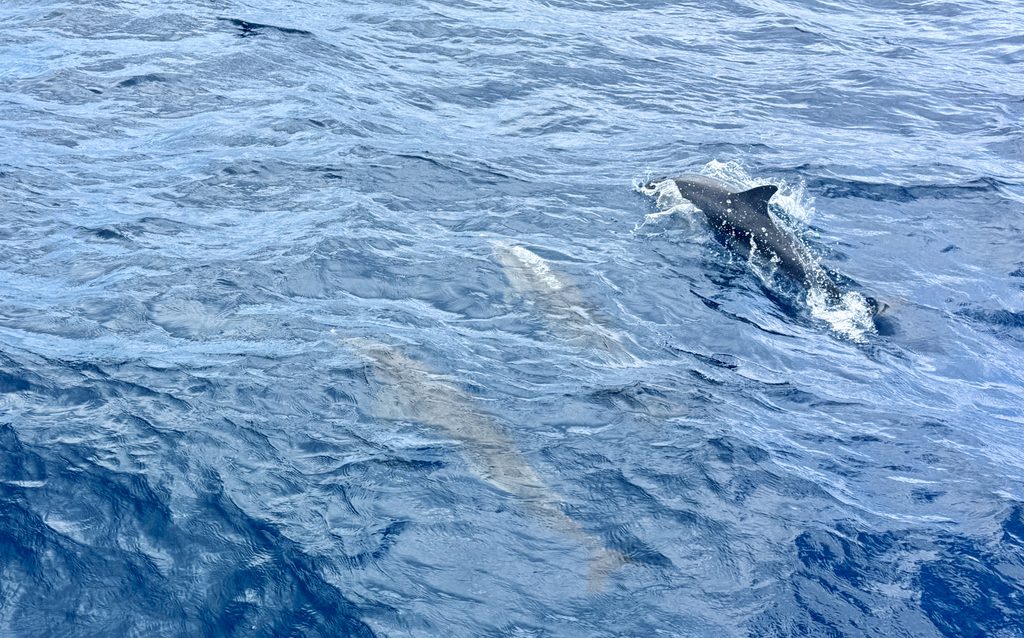
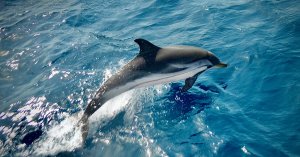
Plötzlich, kurz nach Sonnenaufgang, tauchen Delfine vor unserem Bug auf.
Erst zwei, dann mehrere. Schließlich begleitet uns eine ganze Schule.
Mit unglaublicher Eleganz gleiten die Tiere durch das Wasser, kreuzen dicht vor unserem Bug, tauchen unter dem Schiff und erscheinen Sekunden später wieder in der nächsten Welle. Eine halbe Stunde lang bleiben sie bei uns.
Es sind Begegnungen wie diese, die mich auch nach vielen Tausend Seemeilen berühren. Eben noch konzentriert auf Kurs, Wind und Seegang, wird man daran erinnert, dass man auf dem Ozean nur Gast ist in einer Welt, die ihren eigenen Naturgesetzen folgt.
Am Tag danach singt der Wind in den Wanten und Stagen. Ein seltsam melodischer, beinahe wehmütiger Ton. Unter dem Rumpf gurgelt und rauscht das Wasser. Immer wieder schlägt die GRAPPA hart in eine kurze, steile Welle. Mein Logbuch verzeichnet an diesem Morgen die Position von 21°44’59” Nord und 24°23’03” West.
Irgendwo weit im Osten liegt die afrikanische Küste. Weit im Westen erstreckt sich der offene Atlantik. Um uns herum nichts als Wasser.
Es ist eine ungeheure Weite.
Und eine wunderbare Einsamkeit.
Gefahr in der Dunkelheit
So menschenleer der Ozean erscheint, so überraschend häufig begegnen uns tags und nachts riesige Container-Frachtschiffe. Auf dem Radar erscheinen ihre AIS-Signale zunächst als kleine Symbole. Dann werden aus den abstrakten Daten konkrete Schiffe: bis zu 300 Meter lange Containerschiffe, Massengutfrachter, Handelsschiffe auf den internationalen Routen zwischen Europa, Afrika und Amerika.
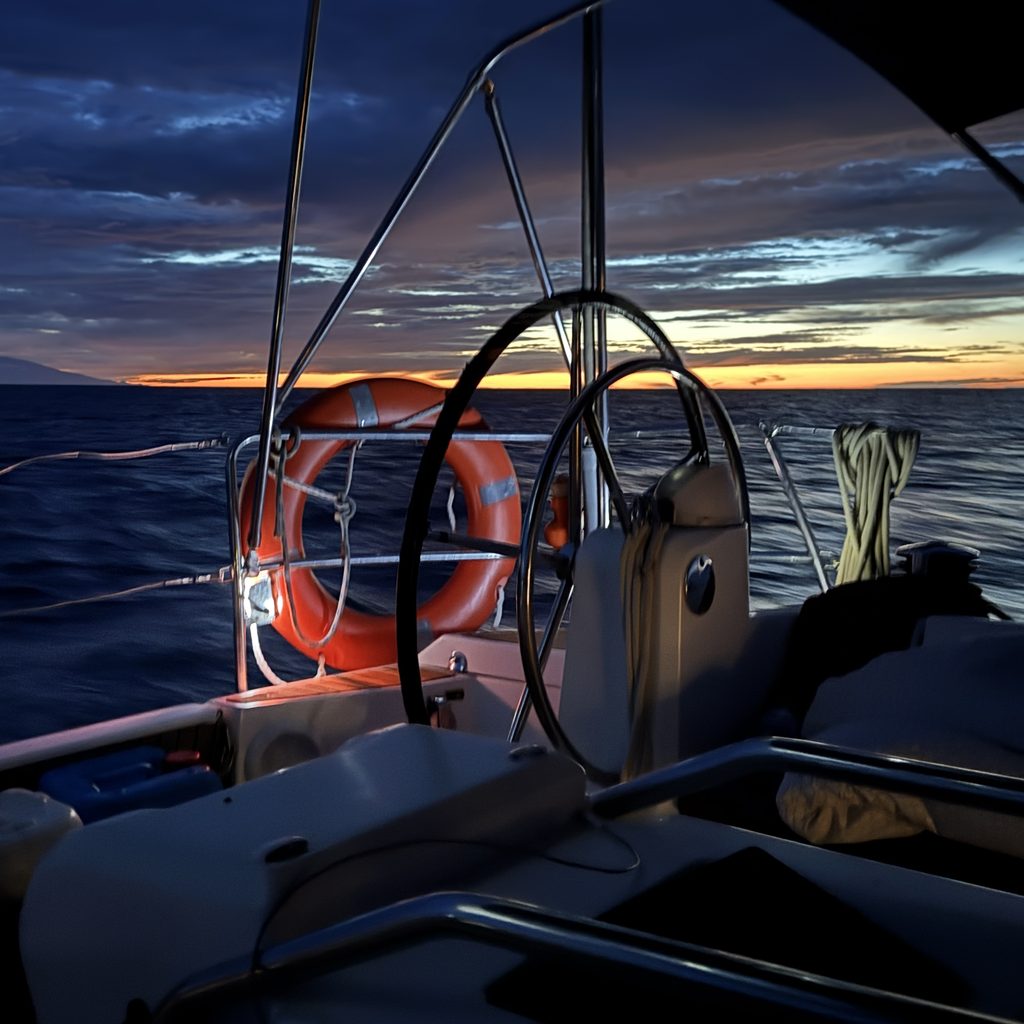
Eines Nachts nähert sich die DIONI auf kritischem Kurs. Ich nehme Funkkontakt auf.
„I can’t see you“, antwortet der Funker vom anderen Schiff. Ich sehe euch nicht…
Ich gebe unsere Position durch. Es rauscht und knackt in der Funkverbindung. Wenig später kommt die Bestätigung, dass der Frachter seinen Kurs ändern wird, um hinter uns vorbeizufahren. Eine kurze Begegnung über Funk. Einige Minuten konzentrierter Navigation. Dann verschwinden die Positionslichter der DIONI wieder in der Dunkelheit.
Doch nicht jede Herausforderung lässt sich durch einen Funkspruch lösen. In einer anderen Nacht reißt die Genuaschot auf Steuerbord. Das Schotende hatte unter Spannung in einem Block gescheuert, nach einem langen Schlag zu auf die Küste von Mauretanien. Jetzt killt die Genua im Wind. Es ist drei Uhr morgens.
Ich muss auf das Vorschiff. Im Dunkeln. Auf einem stampfenden Schiff, weit draußen auf dem Atlantik.
Mit Lifeline und Sicherheitsgurt gesichert, arbeite ich auf dem nassen Deck. Die gerissene Schot wird gekürzt und wieder am Schothorn befestigt. Es ist eine Reparatur, die im Hafen kaum der Rede wert ist. Hier draußen verlangt sie volle Konzentration. Denn ein kleiner Fehler kann auf See große Folgen haben. Dee Teufel steckt im Detail!
Als die Genua wieder steht, nimmt die GRAPPA wieder Fahrt auf. Die JAcht Schiff rauscht weiter durch die Nacht.
Zwischen Flaute und Vollmond
Der Atlantik kann seine Stimmung überraschend schnell verändern.
Nach Tagen mit kräftigem Wind und schwerer See legt sich plötzlich eine fast unwirkliche Ruhe über das Meer.
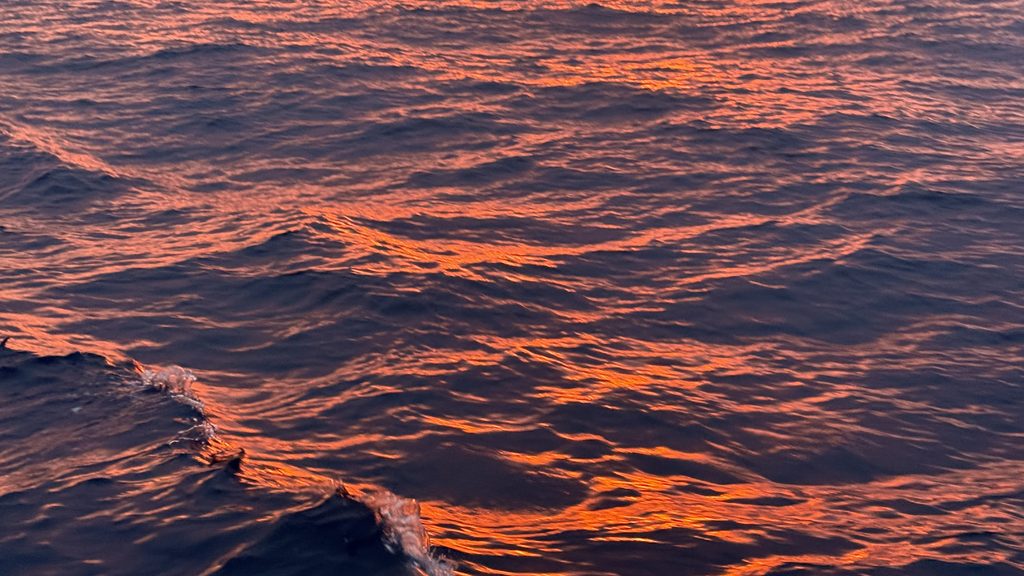
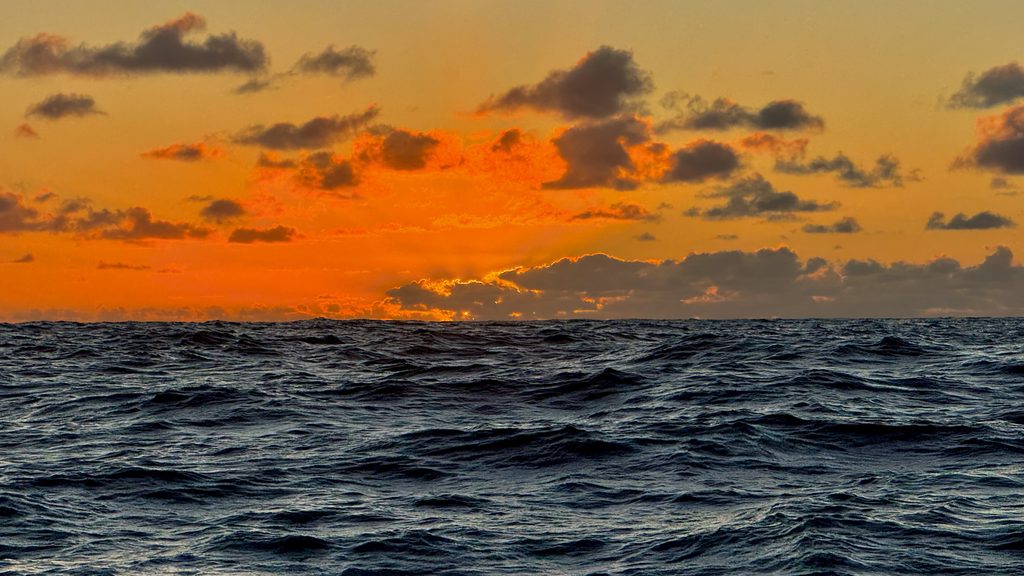
Die Wellen werden flacher. Der Wind schläft ein. Schließlich ist die Oberfläche so glatt, dass sich die wenigen Wolken am Himmel darin spiegeln.
Wir müssen motoren. Stundenlang. Diesel wird zu einer kostbaren Ressource: ich rechnen unsere Reichweite immer wieder neu, kontrolliere den Verbrauch, wir füllen den Tank aus unseren Reservekanistern nach.
Es ist ein merkwürdiger Kontrast: Eben noch haben wir gegen Wind und Wellen gekämpft – nun wünschen wir uns nichts sehnlicher als eine neue frische Brise.
Doch die Flaute hat ihre eigene Schönheit.
Ein Abend bleibt mir besonders in Erinnerung.
Die Sonne versinkt langsam hinter dem Horizont. Der Himmel leuchtet in warmen Orange- und Rottönen. Eine weite, sanfte See liegt vor uns. Kaum eine Welle kräuselt das Wasser.
Auf Steuerbord steigt der beinahe volle Mond empor.
Aus der Kombüse steigt der Duft von Reis mit Gemüse und einer cremigen Zwiebelsauce. Dazu gibt es ein Glas Rotwein.
Für einen Augenblick scheint die Überführung alle Mühen vergessen zu machen. Ich denke an die Verse des spanischen Dichters José de Espronceda: „Que es mi barco mi tesoro, que es mi dios la libertad.“ Mein Schiff ist mein Schatz, mein Gott ist die Freiheit… Vielleicht gibt es kaum Worte, die dieses Gefühl auf einer langen Seereise treffender beschreiben.
Die ersten Zeichen von Land
Am zehnten Tag kündigt sich die Nähe der Kanarischen Inseln auf ganz unscheinbare Weise an.
Eine Schwalbe erscheint über dem Wasser.
Dann ein Schmetterling.
Kleine Lebewesen, die nach so vielen Tagen auf offener See plötzlich wie Botschafter einer anderen Welt wirken.
La Gomera ist nicht mehr weit.
Am Nachmittag hören wir über Funk einen Notruf. Ein Taucher wird vor El Hierro vermisst. Eine Suchaktion läuft.
Es ist die ernste Erinnerung daran, wie schmal der Grat zwischen einem schönen Tag unter Segeln auf dem Meer und einem Seenotfall sein kann.
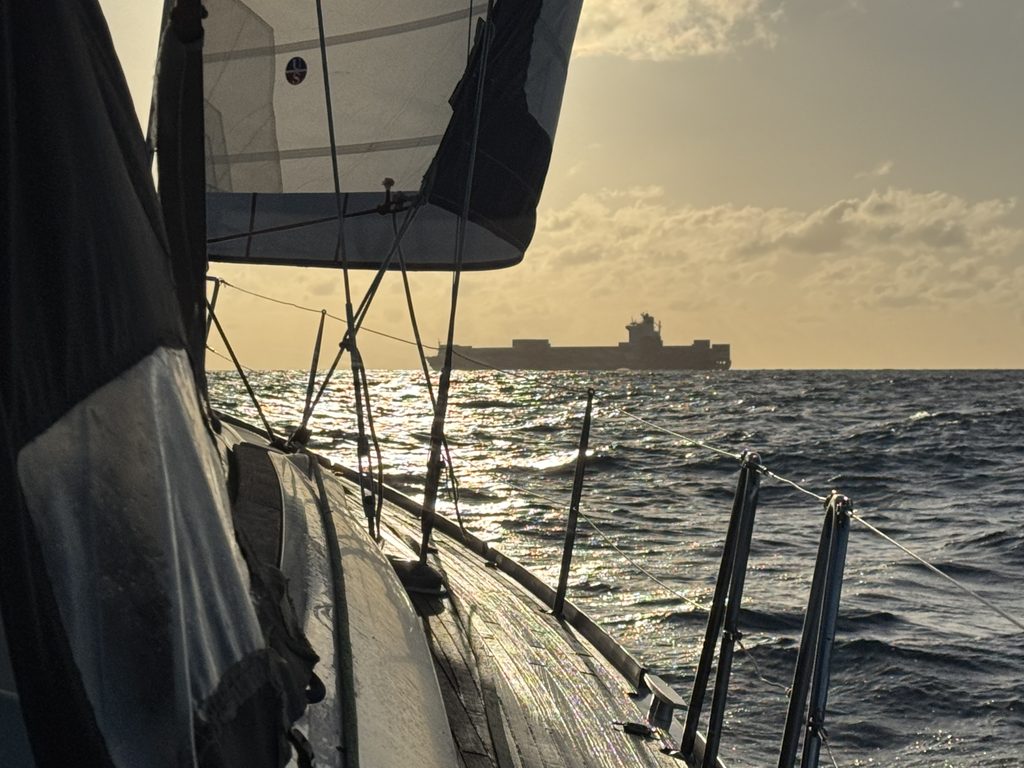
In der folgenden Nacht erreichen wir La Gomera. Es ist drei Uhr morgens, als wir in die Marina einlaufen und GRAPPA festmachen. Zehn Tage liegen hinter uns. Zehn Tage Atlantik, wechselnde Winde, harte Kreuzschläge, Flauten und lange Nachtwachen. Wir haben die erste Etappe geschafft.
Am nächsten Mittag füllen wir Diesel und Proviant auf. Rüdiger verabschiedet sich von uns. Er hat die Passage von den Kapverden zu den Kanaren begleitet. Für Co-Skipper Waldemar und mich beginnt der zweite Teil der Fahrt. Das nächste Ziel: Gibraltar.
Unter dem Vulkan Teide
Als wir La Gomera verlassen, zeigt sich die Welt noch einmal von ihrer schönsten Seite. Hinter uns verschwindet langsam die San Sebastian. Querab erhebt sich La Palma aus dem Atlantik. Auf Steuerbord liegt Teneriffa, gekrönt vom mächtigen Vulkankegel des Teide.
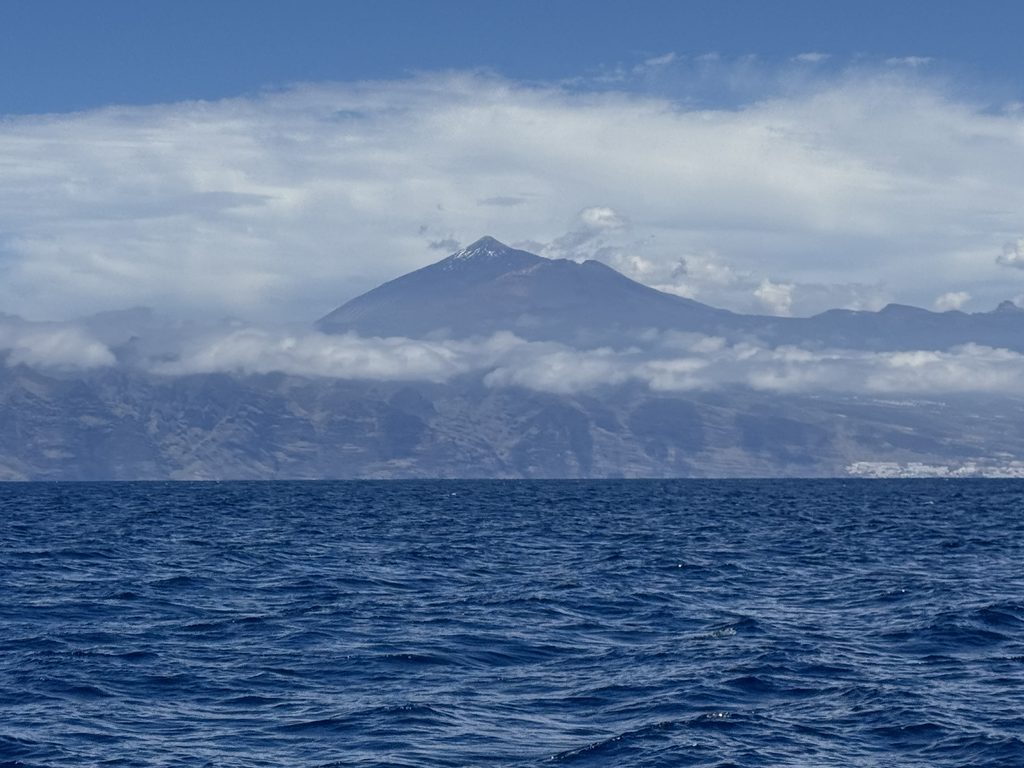
Ein grandioses Panorama. Die Sonne steht über den Inseln, der Himmel ist klar. SY GRAPPA zieht ihre Bahn gen Nordosten.
Am Abend genehmigen wir und ein ordentliches Captains-Dinner: Hühnchenfilet mit Pfeffer-Champignon-Sauce, Reis und Sellerie-Avocado-Salat.
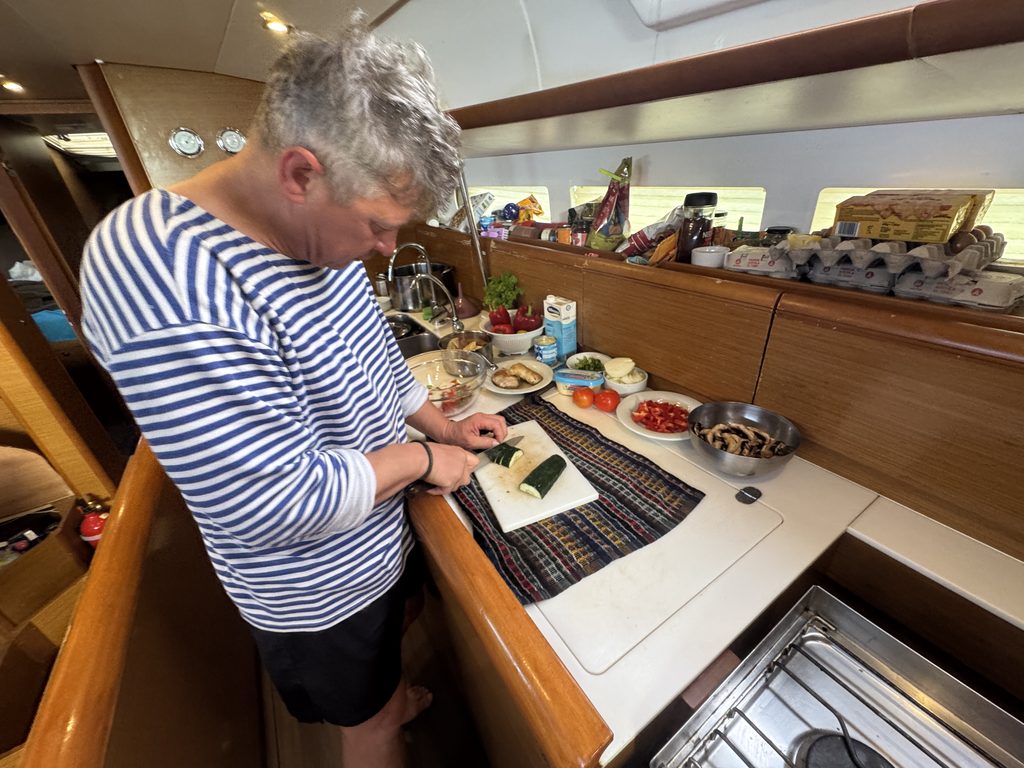
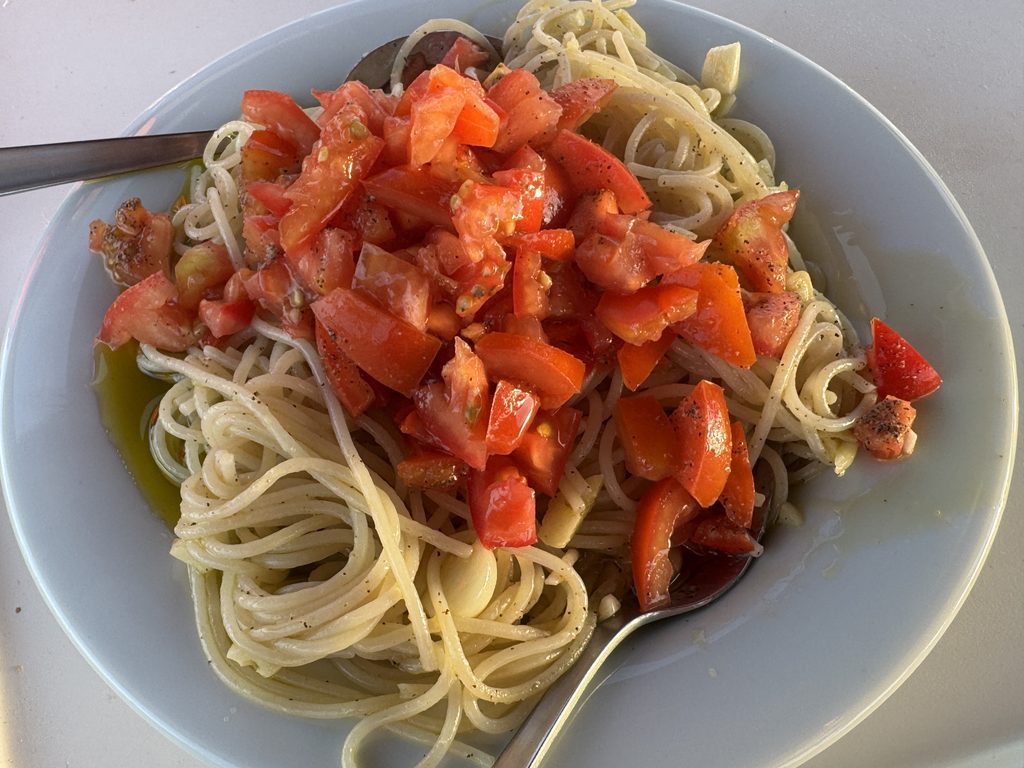
Wer glaubt, Hochseesegeln bedeute zwangsläufig Konservendosen und trockene Kekse, hätte an diesem Abend bei uns an Bord sein sollen.
Doch die Idylle ist trügerisch. Vor uns liegt eine lange Strecke entlang der westafrikanischen Küste. Der Wind kommt erneut überwiegend aus ungünstiger Richtung. Wir kreuzen, motorsegeln, passen den Kurs an, suchen nach einem idealen Winkel, der uns möglichst effektiv nach Nordosten bringt.
Die Maschine läuft immer wieder über viele Stunden. Dazwischen nutzen wir jede Gelegenheit, unter Segeln Fahrt zu machen. An einem Vormittag steht leichter Wind.
Ich steuere die GRAPPA von Hand. Das Schiff bewegt sich sanft durch die kleinen Wellen. Nur ganz sanfte Korrekturen am Ruder sind erforderlich.
Für einen Moment schließe ich die Augen. Ich spüre den Wind im Gesicht, die leichte Bewegung des Rumpfes, den Druck am Steuerrad. Man kann einen Kurs auch einfach fühlen…
Es ist eine jener stillen Erfahrungen, die Segeln so unvergleichlich machen. Die unmittelbare Verbindung zwischen Mensch, Schiff und Natur.
Wenige Tage später wird uns der Atlantik daran erinnern, dass er auch ein ganz anderes Gesicht besitzt.
Sechzehn Stunden am Steuer
Am 8. Mai dreht der Wind endlich auf Südwest.
Zum ersten Mal seit langer Zeit können wir mit raumen Wind segeln. Die Jeanneau nimmt Fahrt auf. Die Sonne scheint, das Wasser leuchtet azurblau. Endlich ein Kurs, auf dem wir unserem Ziel schnell näher kommen.
Und dann reagiert der Autopilot nicht mehr. Die Ursache: Eine unzureichende Ladung der Bordbatterien. Ich muss das Schiff von Hand steuern. Kein Drama. Aber hier, vor der nordwestafrikanischen Atlantikküste, wird daraus eine körperliche und mentale Herausforderung.
Der Wind erreicht in Böen fünfunddreißig Knoten. Es ist ein berauschender Ritt. Gefährlich, wenn man die Kontrolle verliert. Die Yacht neigt dazu, gen Luv auszubrechen. Ich muss jede Welle frühzeitig erkennen, gegensteuern, unmittelbar korrigieren. Zu viel Ruder wäre ebenso falsch wie zu wenig.
Der Wind heult. Wasser rauscht über das Deck. Der Regen peitscht ins Gesicht. Waldemar unterstützt mich, überwacht AIS, kocht Kaffee. Wir sind seit zwei Wochen unterwegs – die Müdigkeit sitzt tief. Doch jetzt zählt nur eines: das Schiff sicher durch diese Nacht zu bringen.
Stunde um Stunde vergeht.
Mitternacht.
Zwei Uhr morgens.
Vier Uhr.
Noch immer stehe ich am Steuer.
Heißer Kaffee hilft, die Konzentration aufrechtzuerhalten.
Als schließlich der Morgen graut, liegen sechzehn Stunden ununterbrochener Handsteuerung hinter mir. Sechzehn Stunden, in denen ich das Steuer nicht aus der Hand gegeben habe.
Erst als sich die See etwas beruhigt und ich bei Tageslicht beigedreht habe, konnte ich mich um den Autopilot kümmern. Es braucht in den tieferen Menü-Ebenen des Raymarine Systems das neue Einlesen aller Daten zu Ruder, GPS, Speedometer und Windgeber, also den vollständigen Reset mit erneuter Konfiguration. Ein kleiner technischer Erfolg – mit großer Wirkung: Gibraltar liegt nun zum Greifen nah.
Das Tor zum Mittelmeer
Am Morgen des 10. Mai erreichen wir die Straße von Gibraltar.
Nach den vergangenen Tagen empfinde ich Erleichterung. Vor uns liegt eine der berühmtesten Meerengen der Welt. Seit Jahrtausenden passieren hier Handelsschiffe und Seefahrer die schmale Verbindung zwischen Atlantik und Mittelmeer.
Die großen Frachter ziehen auf ihren Verkehrsrouten durch das Nadelöhr zwischen Europa und Afrika. Auch wir steuern hinein.
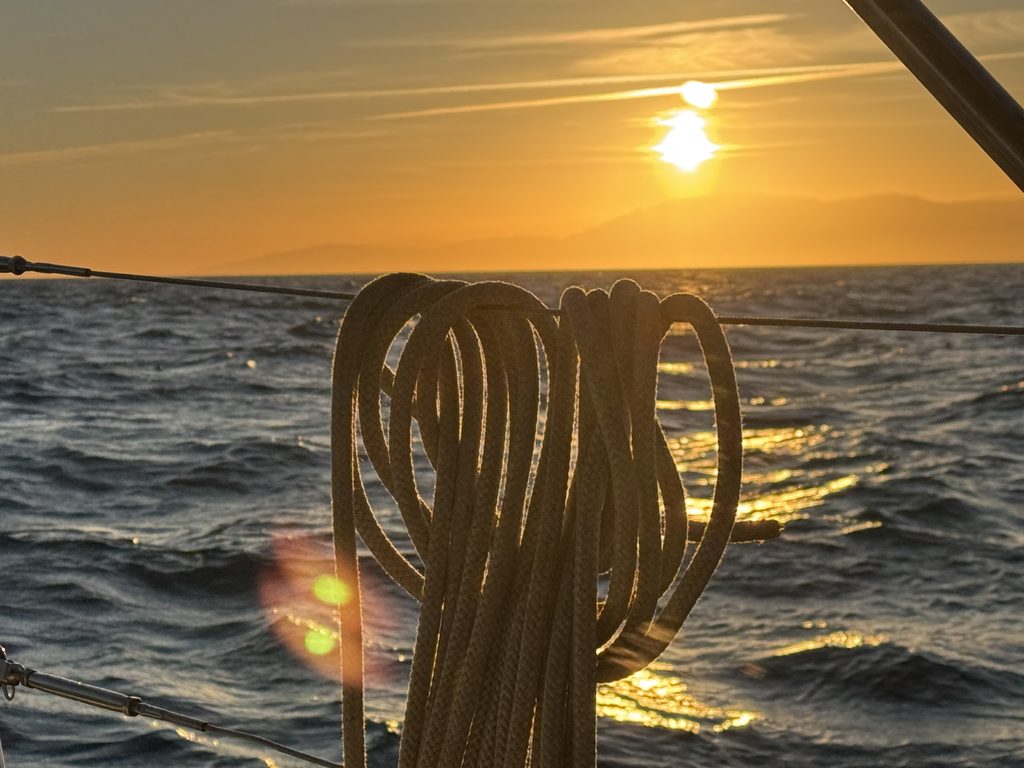
Der Wind ist nach wie vor kräftig. Lange Wellen rollen von achtern heran. Die GRAPPA läuft unter gerefften Segeln mit guter Fahrt ostwärts.
An Land ziehen graue Wolken über die marokkanische Küste. Über Tanger fällt Regen. Der Felsen von Gibraltar verschwindet zeitweise in einer düsteren Wolkenkulisse.
Europa begrüßt uns nicht gerade mit Postkartenwetter. Doch das stört mich wenig – die herausfordernde Atlantiketappe liegt hinter uns.
Dann wartet eine letzte Überraschung auf uns. Vor Ceuta entdecken wir einen Orca. Eigentlich ein wunderschönes Tier – kraftvoll, elegant, faszinierend.
Aber in diesem Revier sind Begegnungen zwischen Orcas und Segelyachten ein ernst zu nehmendes Risiko. Immer wieder kommt es zu Interaktionen, bei denen die tonnenschweren Orcas das Ruder attackieren und beschädigen.
Wir reagieren sofort. Ich nehme Kurs auf die Küste und laufe flacheres Wasser an. Position: 35°56’56” Nord, 5°23’06” West.
Der Orca lässt uns in Ruhe. Der Schreck bleibt.
Die letzten Meilen
Hinter Gibraltar verändert sich die Atmosphäre an Bord. Wir sind wieder im Mittelmeer.
Die Küste Andalusiens zieht an uns vorbei. Málaga, Nerja, Cabo de Gata. Orte, die ich gut kenne. Nach den unendlichen Horizonten des Atlantiks wirken die Berge und Lichter der spanischen Küste beinahe vertraut.
Es ist ein schönes Gefühl, wieder Land in Sicht zu haben. Der Wind spielt weiter sein eigenes Spiel. Mal können wir herrlich mit raumem Wind segeln, mal müssen wir die Maschine zuschalten. Vor der Küste von Almería rauscht GRAPPA zeitweise mit hoher Geschwindigkeit durch das Wasser.
Dann wird es erneut still. Wir passieren die Gewässer vor Cartagena und nehmen Kurs auf die Balearen. Die Küste von Formentera erscheint am Mittag des 13. Mai am Horizont.
Nur noch eine Nacht. Die Maschine läuft. Der Wind ist eingeschlafen. Die Yacht zieht ruhig durch die See. Waldemar und ich haben inzwischen einen Rhythmus gefunden, der keiner großen Worte mehr bedarf. Wir wissen, was zu tun ist. Jeder Handgriff sitzt.
Nach mehr als drei Wochen auf See ist dieses Schiff zu unserem Zuhause geworden. Wir wissen, wie sich die Jacht bei leichtem Wind anfühlt und wie das Boot reagiert, wenn schwere Wellen von achtern auflaufen.
Wir haben ihre Stärken kennengelernt. Und ihre Schwächen. Am nächsten Morgen taucht Mallorca auf.
Ankunft in Palma
14. Mai 2026. Neun Uhr morgens. SY GRAPPA läuft in Palma de Mallorca ein. Ich steuere unseren Liegeplatz an, bereite die Leinen vor und mache fest. Dann steht die Maschine still.
Plötzlich ist da diese eigentümliche Ruhe, die man erst nach einer langen Seereise wirklich wahrnimmt.
Kein Brummen des Motors mehr.
Kein Rauschen des Wassers unter dem Rumpf.
Kein permanentes Arbeiten des Schiffes in der See.
Nur das leise Klappern einer Leine am Mast und die Geräusche des Hafens.
Wir sind angekommen.
2.500 Seemeilen liegen hinter uns. Von den Kapverden über La Gomera, durch die Straße von Gibraltar bis nach Mallorca. 23 Kalendertage, davon fast 22 Tage tatsächlich auf Fahrt. Eine Reise gegen den Passat, durch schwere Atlantikseen, über lange Kreuzschläge und durch ausgedehnte Flautenzonen.
Mit nur einem Zwischenstopp.
Die Jeanneau 51 SY GRAPPA hat ihr Ziel erreicht. Sicher und erfolgreich überführt.
Ich schaue zu Waldemar hinüber. Wir müssen nicht viel sagen. Es gibt Momente, in denen ein Blick genügt.
Was vom Ozean bleibt
Nach vielen Tausend Seemeilen als Skipper weiß ich, dass jede Hochseepassage ihre eigene Geschichte schreibt.
Man kann eine Route planen, Wetterkarten studieren, Treibstoff kalkulieren und sich auf schwierige Bedingungen vorbereiten.
Aber man kann den Atlantik nicht planen.
Er wird immer seine eigenen Entscheidungen treffen.
Auf dieser Überführung hat er uns vieles abverlangt. Geduld, wenn wir tagelang gegen den Wind kreuzen mussten. Ausdauer, wenn die Maschine durch endlose Flauten lief. Konzentration, wenn nachts Frachter unseren Kurs kreuzten. Und Entschlossenheit, als schwere See und ein ausgefallener Autopilot uns an die Grenzen der Kräfte führten.
Aber er hat uns auch reich beschenkt.
Mit Delfinen im Sonnenaufgang. Mit Sonnenuntergängen von unglaublicher Schönheit. Mit dem Vollmond über einer spiegelglatten See.
Mit jenen seltenen Augenblicken vollkommener Stille, in denen man die schier unendliche Weite des Ozeans nicht nur sieht, sondern geradezu körperlich erlebt.
Eine erfolgreiche Yachtüberführung ist für mich weit mehr als die Herausforderung, ein Schiff von einem Hafen in den nächsten zu bringen.
Es ist Verantwortung für Menschen und Material. Sie verlangt nautische Erfahrung, technische Kompetenz und die Fähigkeit, auch unter schwierigen Bedingungen ruhig und überlegt zu handeln. Und es ist jedes Mal aufs Neue eine Begegnung mit der elementaren Kraft der Natur.
ENGLISH
Against Wind and Waves
From Cape Verde via the Canary Islands to Mallorca – A 2,500-Nautical-Mile Atlantic Yacht Delivery aboard a Jeanneau 51
By Michael Allhoff | Capt’n Micha
The Atlantic is black tonight. Rain is falling. In torrents. Gusts of wind sweep across an oily-dark sea. Waves up to six metres high roll towards our sailing yacht from the aft quarter. Again and again, a powerful swell lifts the stern, pushing the yacht forward at tremendous speed. As we surf down the waves, the speed log occasionally registers thirteen knots – despite a theoretical hull speed of just nine knots.
The wind had picked up during the day. Strong at first, then reaching gale force. The waves had grown higher. Rain squalls swept across the ocean. Towering breakers approached, their crests exploding into white spray. Breaking seas now wash over the starboard bow.
I have been steering by hand since well before midnight. The autopilot has failed. No time to reset the electronics. Gibraltar lies somewhere ahead. But we still have a long way to go. This is one of those nights at sea when the entire world shrinks to just a handful of parameters: The compass. Our course. The rudder. The wind. And the next wave…
As our Jeanneau 51, a fifteen-tonne ocean-going yacht, surges through the Atlantic, my thoughts return to our departure from Cape Verde. To the warmth of the tropical sun and the turquoise waters off the island of Sal. And to the fact that, just over two weeks earlier, we had embarked on a voyage whose greatest challenges were still waiting for us.
Farewell to Africa
Palmeira, Sal Island, Cape Verde. 22 April 2026.
The sun stands high above the small harbour town as we cast off our lines in the early afternoon. Ahead of us lies the open Atlantic. Our destination: Palma de Mallorca. Some 2,500 nautical miles away, across an ocean and beyond the Strait of Gibraltar.
Our yacht, SY GRAPPA, is an elegant, fifteen-metre offshore sailing vessel. Comfortable, solidly built and designed for long ocean passages. Yet even a substantial yacht of this size is little more than a nutshell between sea and sky out on the Atlantic.
There are three of us aboard. My co-skipper Waldemar, our deckhand Rüdiger, and myself as the skipper in command.
Waldemar and I share the kind of trust that matters on an offshore passage. Because out there at sea, there is no such thing as clocking off. No captain can run a yacht around the clock on his own. Decisions have to be shared. You need to know that the other man will remain alert during his night watch, even when fatigue and exhaustion begin to take their toll.
The first few hours are pleasant. A gentle northerly breeze brushes across the deck. Sailing Yacht GRAPPA makes her way northwest, initially under engine and mainsail. As the wind freshens, she glides through the Atlantic under sail alone.
But our course takes us straight into the prevailing north-easterly trade winds. Anyone sailing from the Canary Islands towards the Caribbean can let the trades carry them westwards. We, however, are heading in the opposite direction. Northwards, towards Europe!
A sailing voyage against wind and waves.
The Ocean Dictates Our Course
By the second day, it becomes clear that the Atlantic has no intention of giving us a straight route.
The wind blows from the north-northeast. Precisely the direction in which we need to sail. The waves grow higher. Two metres, three metres. GRAPPA pounds into the sea, her bow plunging into the troughs, white spray flying across the foredeck.
We tack.
One leg northwest, then another tack and back towards the east. Long zigzag lines appear on our nautical charts. Sometimes, despite sailing for hours, we make hardly any progress towards our destination.
This is the practical geometry of sailing against the wind. A sailing yacht can do many things. She can harness the power of the wind even when it comes from ahead. But no sailing vessel can sail directly into the wind. And the stronger the wind and waves become on the bow, the further the actual course sailed deviates from the shortest distance between two points.
Our days develop their own rhythm. Standing watch. Trimming sails. Reefing. Tacking. Navigating. Cooking. Sleeping. Then it all begins again.
Hours begin to lose their meaning. The clock no longer determines our daily routine. Instead, it is the changing of the watches, the position of the sun and the shifts in the wind.
I call it “Sea Time” – time aboard a yacht passes differently than it does ashore.
Sometimes the sky is cloudless, and the sun transforms the Atlantic into an endless expanse of brilliant blue. Then grey clouds gather again, and the sea turns steel-grey, leaden, glittering, restless.
At moments like these, you sense that the ocean is alive. The sea is constantly changing. No wave is quite like another, no day unfolds exactly like the one before. And yet – or perhaps precisely because of this – a unique fascination emerges from the apparent monotony.
Dolphins in the Morning Light
On the fourth day, the wind freshens considerably.
We reduce sail. The mainsail is now in its third reef. In places, the waves reach four metres. GRAPPA’s bow works its way through the steep seas.
Suddenly, shortly after sunrise, dolphins appear ahead of our bow.
Two at first, then several more. Eventually, an entire pod joins us.
With incredible elegance, the animals glide through the water, cross directly in front of our bow, dive beneath the hull and reappear seconds later in the next wave.
They stay with us for half an hour.
Encounters like these still move me, even after many thousands of nautical miles at sea. One moment you are concentrating on course, wind and sea conditions; the next, you are reminded that out here on the ocean, you are merely a guest in a world governed by its own laws of nature.
The following day, the wind sings through the shrouds and stays. A strangely melodic, almost wistful sound. Beneath the hull, water gurgles and rushes past. Again and again, GRAPPA slams hard into a short, steep wave.
My logbook records our position that morning as 21°44’59” North, 24°23’03” West.
Somewhere far to the east lies the African coast. To the west, the open Atlantic stretches towards the horizon. All around us, nothing but water.
An immense expanse.
And a wonderful solitude.
Danger in the Darkness
As deserted as the ocean may appear, we encounter surprisingly large numbers of enormous container ships and freighters, both by day and at night.
Their AIS signals initially appear as small symbols on our navigation display. Then the abstract data becomes real ships: container vessels up to 300 metres long, bulk carriers and merchant ships following international shipping routes between Europe, Africa and the Americas.
One night, the freighter DIONI approaches on a potentially conflicting course.
I establish radio contact.
“I can’t see you,” replies the radio operator aboard the other vessel.
I give him our position. The radio crackles and hisses. Shortly afterwards, he confirms that the freighter will alter course to pass astern of us.
A brief encounter over the radio. A few minutes of concentrated navigation.
Then DIONI’s navigation lights disappear once more into the darkness.
But not every challenge can be resolved with a radio call.
On another night, the starboard genoa sheet suddenly breaks. After a long tack towards the Mauritanian coast, the line has chafed under tension in a block. Now the genoa is flogging in the wind.
It is three o’clock in the morning.
I have to go forward onto the foredeck. In darkness. On a pitching yacht, far out in the Atlantic.
Secured with my safety harness and lifeline, I work on the wet deck. I cut away the damaged section of the sheet and reattach the line to the genoa’s clew.
A repair that would hardly be worth mentioning in harbour. Out here, it demands complete concentration.
Because even a small mistake at sea can have serious consequences. The devil is in the detail!
Once the genoa is drawing properly again, GRAPPA picks up speed.
The yacht continues her passage through the night.
Between Calm Seas and a Full Moon
The Atlantic can change its mood surprisingly quickly.
After days of strong winds and heavy seas, an almost unreal calm suddenly settles over the ocean.
The waves flatten. The wind dies away. Eventually, the surface becomes so smooth that the few clouds in the sky are reflected in the water.
We have to motor. For hours on end.
Diesel becomes a precious resource. I repeatedly calculate our remaining range, monitor consumption and refill the tank from our reserve jerrycans.
It is a strange contrast. Only recently, we were battling wind and waves. Now there is nothing we wish for more than a fresh breeze.
Yet the calm has a beauty of its own.
One evening remains particularly vivid in my memory.
The sun slowly sinks beneath the horizon. The sky glows in warm shades of orange and red. A wide, gentle sea stretches ahead of us. Hardly a ripple disturbs the surface.
To starboard, an almost full moon rises into the sky.
From the galley comes the aroma of rice with vegetables and a creamy onion sauce. We enjoy it with a glass of red wine.
For a moment, the passage seems to make us forget all its hardships.
I think of the verses by the Spanish poet José de Espronceda:
“Que es mi barco mi tesoro, que es mi dios la libertad.”
My ship is my treasure, my god is freedom…
Perhaps there are few words that describe the feeling of a long sea voyage more accurately.
The First Signs of Land
On the tenth day, the approaching Canary Islands announce themselves in the most inconspicuous way.
A swallow appears above the water.
Then a butterfly.
Small creatures that, after so many days on the open ocean, suddenly seem like messengers from another world.
La Gomera is not far away.
That afternoon, we hear a distress call over the radio. A diver has gone missing off El Hierro. A search and rescue operation is underway.
A sobering reminder of how narrow the line can be between a beautiful day at sea and a maritime emergency.
During the following night, we reach La Gomera.
It is three o’clock in the morning when we enter the marina and secure GRAPPA alongside.
Ten days lie behind us. Ten days on the Atlantic, with shifting winds, demanding upwind passages, calms and long night watches.
We have completed the first leg of our voyage.
Around midday, we replenish our diesel and provisions. Rüdiger says goodbye. He has accompanied us on the passage from Cape Verde to the Canaries.
For my co-skipper Waldemar and me, the second part of the voyage is about to begin.
Our next destination: Gibraltar.
Beneath the Volcano Teide
As we leave La Gomera, the world reveals itself once again at its most beautiful.
San Sebastián slowly disappears astern. La Palma rises from the Atlantic abeam. To starboard lies Tenerife, crowned by the mighty volcanic peak of Mount Teide.
A magnificent panorama.
The sun shines over the islands, the sky is clear. SY GRAPPA sets course northeast.
That evening, we treat ourselves to a proper Captain’s Dinner: chicken fillet with a pepper and mushroom sauce, rice, and a celery and avocado salad.
Anyone who believes offshore sailing inevitably means surviving on canned food and dry biscuits should have joined us aboard that evening.
But the idyll is deceptive.
Ahead lies a long stretch along the northwest African coast. Once again, the wind comes predominantly from unfavourable directions. We tack, motor-sail, adjust our course and search for the ideal angle to make the most effective progress towards the northeast.
The engine runs for many hours at a time. In between, we seize every opportunity to make progress under sail.
One morning, there is a light breeze.
I steer GRAPPA by hand. The yacht moves gently through the small waves. Only the slightest corrections at the helm are necessary.
For a moment, I close my eyes.
I feel the wind on my face, the gentle movement of the hull, the pressure on the wheel.
Sometimes, you can simply feel the right course…
It is one of those quiet experiences that make sailing so extraordinary. The immediate connection between man, vessel and nature.
A few days later, the Atlantic will remind us that it has an entirely different face.
Sixteen Hours at the Helm
On 8 May, the wind finally shifts to the southwest.
For the first time in what seems like ages, we can sail with the wind abaft the beam. The Jeanneau gathers speed. The sun is shining, the water glows azure blue.
At last, a course that allows us to make rapid progress towards our destination.
And then the autopilot stops responding.
The cause: insufficient charge in the yacht’s batteries.
I have to steer the vessel by hand.
No drama. But here, off the northwest African Atlantic coast, it becomes a physical and mental challenge.
Gusts reach thirty-five knots.
It is an exhilarating ride. Dangerous if you lose control.
The yacht has a tendency to round up into the wind. I have to anticipate every approaching wave, countersteer and make immediate corrections.
Too much rudder would be just as wrong as too little.
The wind howls. Water rushes across the deck. Rain lashes my face.
Waldemar supports me, monitors the AIS and makes coffee.
We have been at sea for two weeks, and fatigue is beginning to take its toll.
But now only one thing matters: getting the yacht safely through the night.
Hour after hour passes.
Midnight.
Two in the morning.
Four o’clock.
I am still at the helm.
Hot coffee helps me maintain my concentration.
When dawn finally breaks, I have completed sixteen uninterrupted hours of hand-steering.
Sixteen hours without letting go of the wheel.
Only when the sea has calmed somewhat and, in daylight, I have brought the yacht to a heave-to position can I turn my attention to the autopilot.
Deep within the Raymarine system’s menus, all the data from the rudder, GPS, speed log and wind instruments has to be reinitialised. A complete reset, followed by a fresh configuration of the system.
A small technical success – with an enormous impact.
Gibraltar is now within reach.
The Gateway to the Mediterranean
On the morning of 10 May, we reach the Strait of Gibraltar.
After the preceding days, I feel relieved.
Ahead of us lies one of the world’s most famous straits. For thousands of years, merchant vessels and seafarers have passed through this narrow connection between the Atlantic Ocean and the Mediterranean Sea.
Large freighters follow their shipping lanes through the bottleneck between Europe and Africa.
We head into the strait as well.
The wind is still strong. Long swells roll in from astern. Under reefed sails, GRAPPA makes good progress eastwards.
Grey clouds gather over the Moroccan coast. Rain falls over Tangier. The Rock of Gibraltar is occasionally hidden beneath a gloomy canopy of clouds.
Europe does not exactly welcome us with picture-postcard weather.
But that hardly bothers me. The demanding Atlantic leg is now behind us.
Then one final surprise awaits.
Off Ceuta, we spot an orca.
A beautiful animal, actually. Powerful, elegant, fascinating.
But in these waters, encounters between orcas and sailing yachts represent a serious risk. There have been repeated interactions in which these multi-tonne animals have struck and damaged yacht rudders.
We react immediately.
I turn towards the coast and head for shallower water.
Position: 35°56’56” North, 5°23’06” West.
The orca leaves us alone.
But the encounter gives us quite a scare.
The Final Miles
Beyond Gibraltar, the atmosphere aboard begins to change.
We are back in the Mediterranean.
The Andalusian coastline passes by. Málaga, Nerja, Cabo de Gata. Places I know well.
After the seemingly endless horizons of the Atlantic, the mountains and lights of the Spanish coast feel almost familiar.
It is a wonderful feeling to have land in sight again.
The wind continues to play its own game. Sometimes we enjoy excellent sailing with a following breeze. At other times, we have to start the engine.
Off the coast of Almería, GRAPPA once again surges through the water at impressive speed.
Then the wind dies away.
We pass the waters off Cartagena and set course for the Balearic Islands.
The coast of Formentera appears on the horizon on 13 May.
Just one more night.
The engine is running. The wind has faded. The yacht moves quietly through the sea.
Waldemar and I have settled into a rhythm that no longer requires many words. We know what needs to be done. Every movement has become routine.
After more than three weeks at sea, this yacht has become our home.
We know how she feels in light winds and how she responds when heavy seas roll in from astern.
We have come to know her strengths.
And her weaknesses.
The following morning, Mallorca appears on the horizon.
Arrival in Palma
14 May 2026. Nine o’clock in the morning.
SY GRAPPA enters the harbour of Palma de Mallorca.
I steer towards our berth, prepare the mooring lines and bring the yacht alongside.
Then the engine falls silent.
Suddenly, there is that peculiar stillness you only truly notice after a long sea voyage.
No more humming of the engine.
No more rushing water beneath the hull.
No more constant movement of the vessel in the waves.
Just the gentle tapping of a line against the mast and the familiar sounds of the harbour.
We have arrived.
2,500 nautical miles lie behind us. From Cape Verde via La Gomera, through the Strait of Gibraltar and on to Mallorca.
Twenty-three calendar days, almost twenty-two of them actually underway.
A voyage against the trade winds, through heavy Atlantic seas, along countless upwind tacks and across extensive areas of calm.
With just one stopover.
The Jeanneau 51, SY GRAPPA, has reached her destination.
Safely and successfully delivered.
I look across at Waldemar.
We do not need to say much.
There are moments when a glance says everything.
What the Ocean Leaves Behind
After many thousands of nautical miles as a skipper, I know that every offshore passage writes its own story.
You can plan a route, study weather charts, calculate fuel requirements and prepare for difficult conditions.
But you cannot plan the Atlantic.
The ocean will always make its own decisions.
On this delivery, it demanded a great deal from us.
Patience, when we had to tack against the wind for days. Endurance, when the engine ran through seemingly endless calms. Concentration, when freighters crossed our course at night. And determination, when heavy seas and a failed autopilot pushed us to the limits of our strength.
But the Atlantic also rewarded us generously.
With dolphins at sunrise. With sunsets of extraordinary beauty. With a full moon above an almost mirror-like sea.
With those rare moments of perfect stillness when you do not simply see the seemingly infinite vastness of the ocean, but experience it almost physically.
For me, a successful yacht delivery is far more than the challenge of bringing a vessel from one harbour to another.
It means taking responsibility for people and the yacht itself. It demands nautical experience, technical competence and the ability to remain calm and make sound decisions, even under difficult conditions.
And every time, it is another encounter with the elemental power of nature.
Fair winds and following seas!
Michael Allhoff – Capt’n Micha
Professional Skipper & Delivery Captain
#in2sailing | www.michaelallhoff.com
SY GRAPPA | Jeanneau 51 | Cape Verde – Canary Islands – Gibraltar – Mallorca | 22 April – 14 May 2026
Skipper: Michael Allhoff | Co-Skipper: Waldemar Rode | Crew, first leg: Rüdiger Böger
Fair winds and following seas!
Michael Allhoff – Capt’n Micha
Professional Skipper & Delivery Captain
#in2sailing | www.michaelallhoff.com
SY GRAPPA | Jeanneau 51 | Kapverden – Kanaren – Gibraltar – Mallorca | 22. April bis 14. Mai 2026
Skipper: Michael Allhoff | Co-Skipper: Waldemar Rode | Crew erste Etappe: Rüdiger Böger